

Formula 10.0 6 Draw It All Out
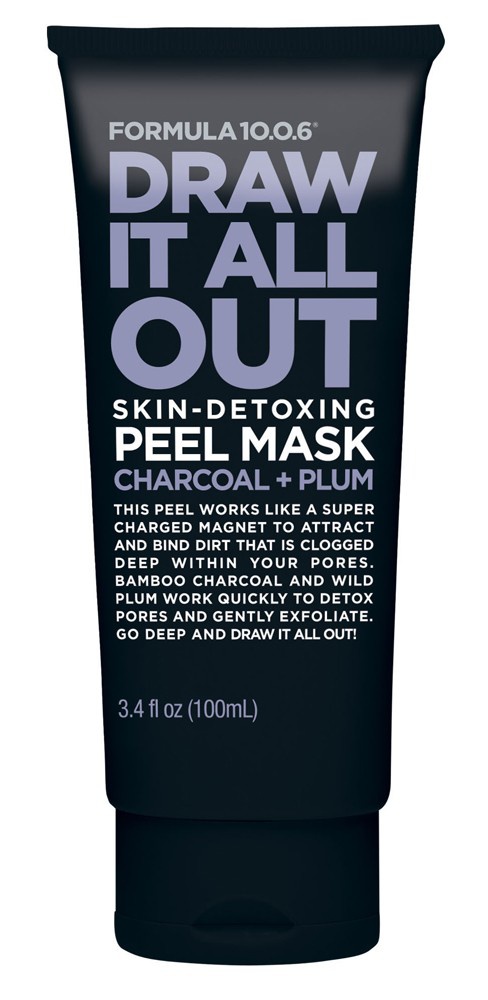
Draw It All Out
Skim peel that attracts and binds to dirt that is clogged dee beneath the pores.
Uploaded by: judetya on
Ingredients overview
Water, Polyvinyl Alcohol, Alcohol Denat, Polysorbate 80, Glycerin, Charcoal Powder*, Butylene Glycol, Betaine, Terminalia Ferdinandiana (Kakadu Plum) Fruit Extract, Pleiogynium Timoriense (Burdekin Plum) Fruit Extract, Podocarpus Elatus (Illawarra Plum) Fruit Extract, Polyacrylamide, C13-14 Isoparaffin, Laureth-7, Fragrance, Disodium EDTA, Phenoxyethanol
Highlights
Key Ingredients
Other Ingredients
Skim through
| Ingredient name | what-it-does | irr., com. | ID-Rating |
|---|---|---|---|
| Water | solvent | ||
| Polyvinyl Alcohol | viscosity controlling | ||
| Alcohol Denat | antimicrobial/antibacterial, solvent, viscosity controlling | icky | |
| Polysorbate 80 | emulsifying, surfactant/cleansing | 0, 0 | |
| Glycerin | skin-identical ingredient, moisturizer/humectant | 0, 0 | superstar |
| Charcoal Powder* | abrasive/scrub | ||
| Butylene Glycol | moisturizer/humectant, solvent, viscosity controlling | 0, 1 | |
| Betaine | moisturizer/humectant | goodie | |
| Terminalia Ferdinandiana (Kakadu Plum) Fruit Extract | antioxidant, skin brightening | ||
| Pleiogynium Timoriense (Burdekin Plum) Fruit Extract | |||
| Podocarpus Elatus (Illawarra Plum) Fruit Extract | |||
| Polyacrylamide | viscosity controlling | ||
| C13-14 Isoparaffin | emollient, viscosity controlling, solvent | ||
| Laureth-7 | emulsifying, surfactant/cleansing | ||
| Fragrance | perfuming | icky | |
| Disodium EDTA | chelating | ||
| Phenoxyethanol | preservative |
Formula 10.0.6 Draw It All Out
Ingredients explainedAlso-called: Aqua | What-it-does: solvent
Good old water, aka H2O. The most common skincare ingredient of all. You can usually find it right in the very first spot of the ingredient list, meaning it's the biggest thing out of all the stuff that makes up the product.
It's mainly a solvent for ingredients that do not like to dissolve in oils but rather in water.
Once inside the skin, it hydrates, but not from the outside - putting pure water on the skin (hello long baths!) is drying.
One more thing: the water used in cosmetics is purified and deionized (it means that almost all of the mineral ions inside it is removed). Like this, the products can stay more stable over time.
 We don't have description for this ingredient yet.
- It's a super common and super debated skincare ingredient
- It has several benefits: great solvent, penetration enhancer, creates cosmetically elegant, light formulas, great astringent and antimicrobial
- It can be very drying if it's in the first few ingredients on an ingredient list
- Some experts even think that regular exposure to alcohol damages skin barrier and causes inflammation though it's a debated opinion (read more in geeky details tab)
Read all the geeky details about Alcohol Denat. here >>
A common little helper ingredient thathelps water and oil to mixtogether, aka emulsifier.
The number at the end refers to the oil-loving part and the bigger the number the more emulsifying power it has. 20 is a weak emulsifier, rather called solubilizer used commonly in toners while 60 and 80 are more common in serums and creams.
- A natural moisturizer that's also in our skin
- A super common, safe, effective and cheap molecule used for more than 50 years
- Not only a simple moisturizer but knows much more: keeps the skin lipids between our skin cells in a healthy (liquid crystal) state, protects against irritation, helps to restore barrier
- Effective from as low as 3% with even more benefits at higher concentrations up to 20-40% (around 10% is a good usability-effectiveness sweet spot)
- High-glycerin moisturizers are awesome for treating severely dry skin
Read all the geeky details about Glycerin here >>
We don't have description for this ingredient yet.
Butylene glycol, or let's just call it BG, is a multi-tasking colorless, syrupy liquid. It's a great pick for creating a nice feeling product.
BG's main job is usually to be a solvent for the other ingredients. Other tasks include helping the product to absorb faster and deeper into the skin (penetration enhancer), making the product spread nicely over the skin (slip agent), and attracting water (humectant) into the skin.
It's an ingredient whose safety hasn't been questioned so far by anyone (at least not that we know about). BG is approved by Ecocert and is also used enthusiastically in natural products. BTW, it's also a food additive.
A sugar beet derived amino acid derivative with nice skin protection and moisturization properties. Betain's special thing is being an osmolyte, a molecule that helps to control cell-water balance. It is also a natural osmoprotectant, meaning that it attracts water away from the protein surface and thus protects them from denaturation and increases their thermodynamic stability.
It also gives sensorial benefits to the formula and when used in cleansers, it helps to make them milder and gentler.
We don't have description for this ingredient yet.
We don't have description for this ingredient yet.
We don't have description for this ingredient yet.
It's a film-forming and thickening polymer (a large molecule composed of many repeated subunits) that comes to the formula usually as part of an emulsifier, thickener trio (with C13-14 Isoparaffin and Laureth-7, trade named Sepigel 305). This trio is an easy-to-use liquid that helps to create nice, non-tacky gel formulas.
It's a petroleum derived emollient and thickener. It often comes to the formula as part of an emulsifier, thickener trio (with Polyacrylamide and Laureth-7). This trio is an easy-to-use liquid that helps to create nice, non-tacky gel formulas.
A not-very-interesting helper ingredient that is used as an emulsifier and/or surfactant. Comes from a coconut oil derived fatty alcohol, lauryl alcohol.
Also-called: Fragrance, Parfum;Parfum/Fragrance | What-it-does: perfuming
Exactly what it sounds: nice smelling stuff put into cosmetic products so that the end product also smells nice. Fragrance in the US and parfum in the EU is a generic term on the ingredient list that is made up of 30 to 50 chemicals on average (but it can have as much as 200 components!).
If you are someone who likes to know what you put on your face then fragrance is not your best friend - there's no way to know what's really in it.
Also, if your skin is sensitive, fragrance is again not your best friend. It's the number one cause of contact allergy to cosmetics. It's definitely a smart thing to avoid with sensitive skin (and fragrance of any type - natural is just as allergic as synthetic, if not worse!).
Super common little helper ingredient thathelps products to remain nice and stable for a longer time. It does so by neutralizing the metal ions in the formula (that usually get into there from water) that would otherwise cause some not so nice changes.
It is typically used in tiny amounts, around 0.1% or less.
It's pretty much the current IT-preservative. It's safe and gentle, but even more importantly, it's not a feared-by-everyone-mostly-without-scientific-reason paraben.
It's not something new: it was introduced around 1950 and today it can be used up to 1% worldwide. It can be found in nature - in green tea - but the version used in cosmetics is synthetic.
Other than having a good safety profile and being quite gentle to the skin it has some other advantages too. It can be used in many types of formulations as it has great thermal stability (can be heated up to 85°C) and works on a wide range of pH levels (ph 3-10).
It's often used together with ethylhexylglycerin as it nicely improves the preservative activity of phenoxyethanol.
You may also want to take a look at...
Normal (well kind of - it's purified and deionized) water. Usually the main solvent in cosmetic products. [more] Alcohol with some additives to make it unconsumable. It is great solvent, penetration enhancer, creates cosmetically elegant, light formulas, great astringent, and antimicrobial. In large amounts, it can be very drying to the skin. [more] A common little helper ingredient that helps water and oil to mix together, aka emulsifier. [more] A real oldie but a goodie. Great natural moisturizer and skin-identical ingredient that plays an important role in skin hydration and general skin health. [more] An often used glycol that works as a solvent, humectant, penetration enhancer and also gives a good slip to the products. [more] A sugar beet derived amino acid derivative with nice skin protection and moisturization properties. Its special thing is being an osmolyte, a molecule that helps to control cell-water balance. [more] A film-forming and thickening polymer (a large molecule composed of many repeated subunits) that comes to the formula usually as part of an emulsifier, thickener trio. [more] A petroleum-derived emollient and thickener. It often comes to the formula as part of an emulsifier, thickener trio. [more] A not-very-interesting helper ingredient that is used as an emulsifier and/or surfactant. Comes from a coconut oil derived fatty alcohol, lauryl alcohol. [more] The generic term for nice smelling stuff put into cosmetic products so that the end product also smells nice. It is made up of 30 to 50 chemicals on average. [more] Super common little helper ingredient that helps products to remain nice and stable for a longer time. It does so by neutralizing the metal ions in the formula (that usually get into there from water) that would otherwise cause some not so nice changes. [more] Pretty much the current IT-preservative. It's safe and gentle, and can be used up to 1% worldwide. [more]
Formula 10.0 6 Draw It All Out
Source: https://incidecoder.com/products/formula-10-0-6-draw-it-all-out
Posted by: woodmanthemarly88.blogspot.com
0 Response to "Formula 10.0 6 Draw It All Out"
Post a Comment